My DPS Year

  • Week com. 17th November

    Formative assessment

    Are there any challenges in your placement? 

    Assisting in workshops which teach skills I’m not confident in myself. 

    What are the highlights of your placement so far? 
     It’s been satisfying to see the way the artists who work there think about the workshops they run, reflect on the work completed by the students and brainstorm ways to develop the work for exhibition. It’s interesting to see how critical practice is used to develop art and workshops, and learn about how free arts programs fundraise.   

    What plans/contacts are you making for your next placement?  

    I should be starting my next placement in doing arts therapy at a primary school tomorrow or later this week. I also found a local arts therapy place which accepts volunteers so I can continue working over the winter break. I am keeping in contact with the guy who runs the internship I will be doing between April and June. 

    What do you want to learn? What would success look like to you by the winter break (December)? 

    Learning how to get paid… I don’t really know, but being able to maintain the schedule between two placements might be a success. 

    What are your next steps? 
    I’ve gotten permission to teach my own workshop in the spring term, and I’m thinking to use this for my SIP? So my next steps will be choosing a topic that will be valuable for the young people at the place I work. Perhaps I can combine the session with some of the things I learn from teaching arts therapy, to help constuct a session about using art for wellbeing? 
    What would you like to achieve in the spring term (January to April)? 
    Once I’ve settled properly into my placements, I’d like to begin developing my personal practice as an illustrator again and figuring out how to market and sell myself as a creative. I want to set myself up well for being a useful worker at my next placement, and for my final year at university.  

    Are you managing your time & work/life balance ok?  

     I only work 2 days a week, but I still find it difficult to do anything self-led outside of work. I’m quite concerned that I will be adding 3 more days to my week and suddenly be full-time, as I have chronic fatigue and need a lot of time to recover after exerting myself. Although the only way to manage this condition is by pacing myself, I’m worried that I need all the days I can get on the DPS, as I feel I am far off track from reaching 100 days of work, and I wonder if it’s impossible to reach at this stage, even if I begin working 5 days a week, because I’ve been working so little thus far. 

    Is there any other support you feel you need?  

    I got in contact with the disability team to arrange mentoring for ADHD, so I could get help with my schedule and managing my time around work, but they never got back to me and I haven’t thought about that again until just now… I should follow up on that. 

    I need help mathematically calculating how much work I need to be doing to achieve the minimum number of days required for the DPS and to be honest I’m still unclear on the other requirements of what needs to be submitted by the end of the course. 

    Tutor feedback:  
     This meeting had solidified that you need to create a hourly schedule for every day of the week and label how you are spending it. Factor in sleep work, development time and socializing so you can accounting for how much personal development you are doing then present those skills to people/ organisations to pay for your services LINKEDIN LEARNING  should be done 3 – 4 times a week for an hour each time.    

  • Creating a post for the Arts Abroad Instagram page

    Between September and January, I spent a lot of time working on an Instagram post for International Mobility as a response to the arts abroad program I completed over the summer.

    As I struggle with ADHD and Dyspraxia, knowing how long a task will take, planning, and project management, and then the actual execution of the different stages get really scrambled up in my head. This is why a simple task like “create an instagram post about your time studying abroad and submit it by the end of August” ended up being a complex project with several full-colour illustrations, a script, and was unfinished until the end of January.

    I wanted to write a little bit about how I completed this project, because although I’m very happy with the final outcome, the way I seriously struggled creating this was very eye-opening to me.

    I ended up creating many fake deadlines and using the spare time I had over the winter break, as ATeam Arts wasn’t running over the break, in order to complete this project. Unfortunately, nothing worked until I finally found a workflow that I really, truly enjoyed for itself, and didn’t feel like I was grinding my bones down just to be able to complete.

    The scripting, sketching, and lineart stage was an absolute slog, as I’d decided to do it all by hand and fountain pen, as I really liked the quality the lines created. In hindsight, it may be useful to develop more skills in digital lineart in order to work on commercial projects with tight deadlines.

    Trying to do any kind of non-stimulating activity like sitting down and drawing from photo references with ADHD feels genuinely torturous, which is why I ended up putting off and procratinating the task for so long, but another significant issue I didn’t recognise as being as necessary as I thought it was was finding the time and space to be able to focus and complete the work. During the summer, I moved back home and had to sleep in the living room as I no longer have a room in my house and was sleeping on the floor in my living room. This also meant I didn’t have a desk to work on, which really delayed me even further. Thankfully, by the end of the year, I had a workspace and was able to complete the lineart and sketching.

    The colouring stage was really fun because I really got into the flow of things. After work, I would go and visit a cafe with my laptop and drawing tablet to digitally colour all of my hand-drawn sketches. I learned how effective it is for me to work in a cafe environment because it’s a place with, first of all coffee, which really allows me to focus and lock in, and it’s just uncomfortable enough that I won’t feel the need to take frequent breaks or find something else to do. There is enough background noise to keep me mentally stimulated while I focus on a task, and most importantly of all, with strangers and cafe workers around to surveil you, it creates peer pressure to appear productive.

    Doing this project was challenging, but I learned so much about workflows, the conditions I need in order to complete work. After having a conversation with my mentor about the process of completing this project, it also prompted me to get back in contact with my GP and make some progress on a medical diagnosis (other than ADHD as a SPLD) so I can get medication in order to make the whole process easier. I’m on track to have this set up by Third Year. It also created a piece of work which I am proud to put in my portfolio.

  • Safeguarding Training and certificate

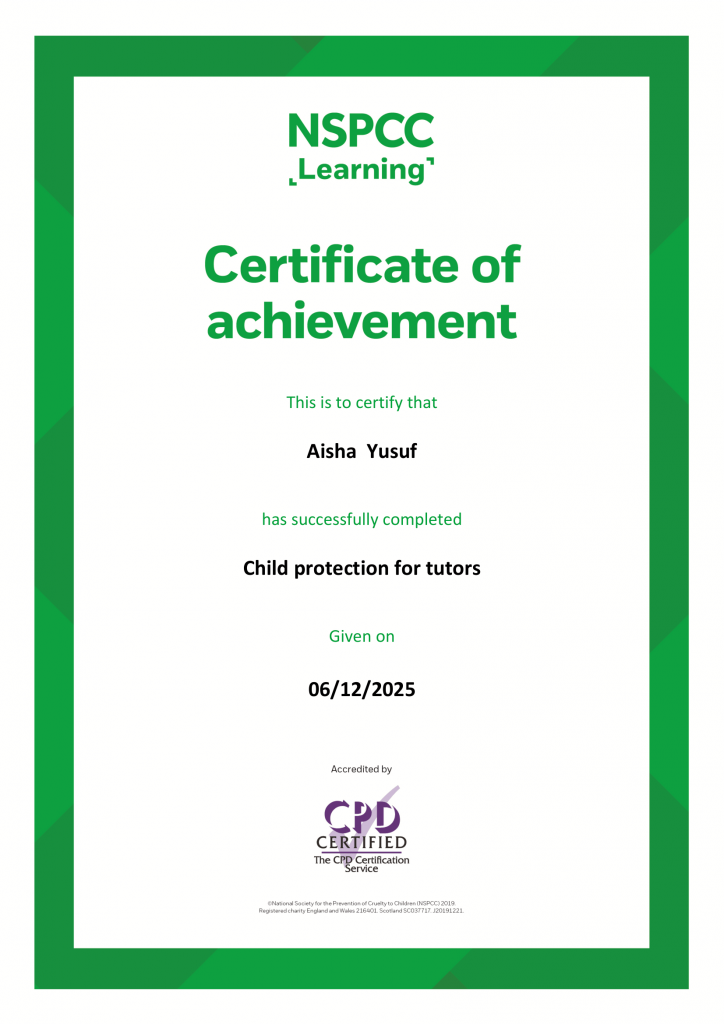
    I completed a safeguarding training course as part of my work placement at ATeam Arts. I learnt a lot and will attach pictures of my notes later.

  • Week 3: Values

    This is the post for week 3

  • Week 2: Positionality

    This is the post for week 2

  • Week 1: Starting the DPS

    I think I might be one of the most unemployable people to ever exist, which is why I decided to take on the DPS year. I thought, perhaps I can try out a few different industries, and see what kind of job fits me, whilst building up my employability skills.

    I started on quite a harsh note. One of the places I had been relying on (an illustration agency which I had gotten work experience with before), told me they wouldn’t be able to take me, as they don’t have enough staff or resources to have me around- although I suspect that my lack of portfolio and disappointing skill level in animation might have a role to play in it too.

    That’s when I knew I was really screwed, because I needed a placement confirmed in order to enroll, and my only other kind-of-confirmed placement was from a guy in Japan, who is quite slow to respond to emails.

    So I was scrambling to find a placement, contacting different organizations locally -those which I have a connection with and those I don’t- applied for a role aimed at graduates, got two video interviews and was rejected from both placements.

    The only reason I can say I’m here on this course today is thanks to a connection I had through my older sister. Back when my sister was in college studying art, she went to a youth arts program called ATeam Arts. This was the organisation that took me in and processed my paperwork just in time for me to enroll for the first session. I really am thankful!

    My biggest problem so far is my lack of a portfolio. I’ve been trying to put one together since last April, but I’ve had no luck. It’s been a horrible mix of my learning difficulties (ADHD and Dyspraxia), making planning out the steps of the task, gathering the work, and putting it together, without a hard deadline, mixed up in my head. On top of that, I’ve realised I’m quite insecure about sharing my work, and every time I try to start the task, I get held back by my self-hatred and disappointment in myself for not working harder in my first and second years.

    This is actually the benefit of the DPS for me, however. I’ve had an opportunity to seriously evaluate myself from a skills perspective, see what I’ve missed out on learning that I need to develop in my third year. I’ve also had the chance to reflect on my past projects and how the work I did can be explained in a professional or commercial context. Needless to say, however this year goes, I will be working a lot harder in my final year.

    Hopefully, soon, I will be able to complete my portfolio and present myself as a skilled and useful member of society.

  • Induction

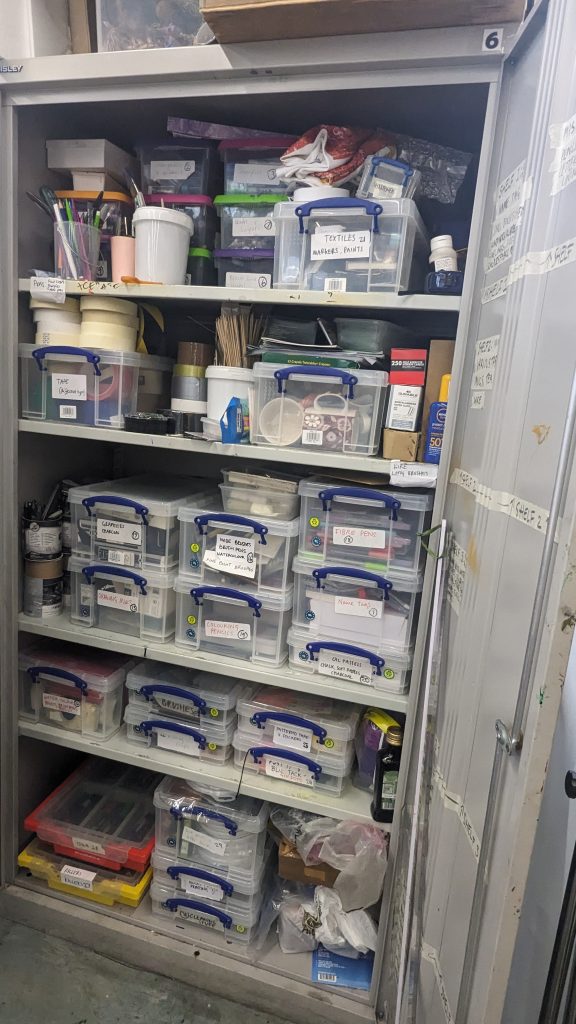
    My first session was an induction to the space. Sarbjit wanted me to learn the location of all of the materials in the art room so I would be able to bring out materials as needed to prepare for each session. It’s cool to be in a space with so many art materials, but I have no idea how I’m going to remember all this…